
Duration: 2021-2025
The Youth Designing Climate Resilience (YDCR) project, funded by a Social Science and Humanities Council Research Grant, included working on two parallel projects with youth, educators, and researchers with one team in British Columbia, Canada (BC), and another in Puerto Rico (PR). The project team included researchers and practitioners with deep expertise and experience working with youth, all of whom shared a commitment to using creative and empowering approaches within education. Several members of the core team had experience working with DT as a methodology aimed at creative problem-solving and the generation of new knowledge. DT was fundamental in the conceptualization of the YDCR project and its implementation (2020-2024).
Vision
The Youth Designing Climate Resilience project (YDCR) was designed to engage youth in dialogue and action focused on resilience in the face of climate change. The goal was to better understand the ways in which youth and educators might work together to take action on climate, and in so doing, help youth in particular develop or enhance their sense of efficacy and empowerment as climate action leaders.
The project aimed to create a cadre of youth and educators in Puerto Rico and British Columbia with a skill base and a sense of agency to address the continued impact of disasters arising from climate change and beyond. They would do this through understandings gained through design thinking and community-based complex problem-solving.
In Puerto Rico, the project partnered with the Instituto de Desarrollo de la Juventud (IDJ), a youth development institute with the goal of enhancing knowledge gathering and sharing. IDJ’s mandate is to develop, promote and evaluate policies that improve youth wellbeing.
Process
This research was conducted through a series of studies in Canada and Puerto Rico (PR). The project was designed to be responsive to two very different cultural, geographical, political, and economic environments, not to mention the different “places” and contexts of each project in both British Columbia (BC) and PR. In other words, the design was adapted to difference, but also be enriched by that very difference. A core element of the YDCR project in both contexts was to involve students and educators in their respective countries in working with Design Thinking (DT) to ideate and enact climate resilience projects in their schools and/or communities.
The research involved the use of DT to support the investigation of climate concerns of interest to youth in each context, and provide a foundation for youth and educators to ideate and prototype solutions.
In Puerto Rico, initiatives were situated in a variety of educational settings, from high school to university. The following five design circles guide the Puerto Rico process:
- Project design Community Cafe
- Design of workshops and training
- Design thinking grounding sessions
- Curriculum integration
- Climate Initiatives led by youth participants under educator mentorship.
In BC, small ‘pods’ of young people (elementary to high school) supported by educators helped students execute community-based climate resilience initiatives. These pods formed a network of support, learning, and sharing. Each pod addressed climate change in unique ways based on its community context and school setting. The activities guide the British Columbia process:
- Design thinking grounding session
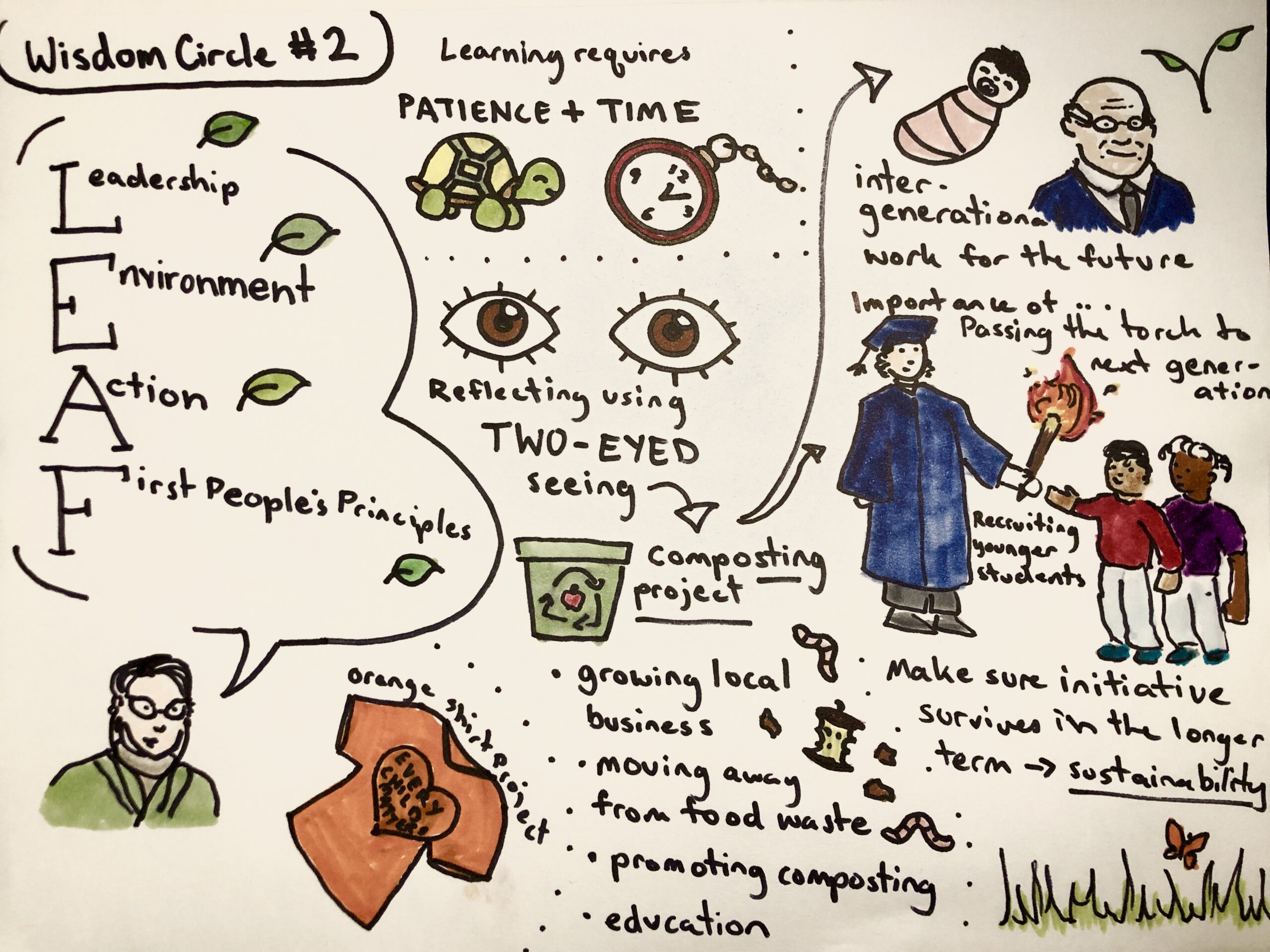
- Wisdom circles (Gathering place to share wisdom, reflections, and support across pods)
- Project launches and micro-grants
In addition to the basic infrastructure of pods, grounding sessions, and wisdom circles, the extended project team (core and educators) agreed to three foundational practices that would guide the work. These were Design Thinking, Place Based Education, and Reconciliation, or Reconcili- action as we came to call it, the active practice of valuing Indigenous Ways of Knowing, Learning and Being. These commitments provided thinking models and resources to help guide and inform the process youth engaged in to identify the climate concerns on which their project might focus. Through this process and discussion with others in their communities, issues emerged as ones they were collectively interested in addressing through their project(s).
Impact
The project emphasized co-learning by youth and adults and shared adult responsibility to support youth voices. As part of research in both countries, youth ideated and implemented climate change and resilience projects and documented these through:
- videos
- blogs
- vlogs
- story-telling
- publications.
The Designing Climate Resilience: Youth in Action book provides a detailed documentation of the YDCR project including the process, the youth-educator projects, and lessons learned.